Sculptra
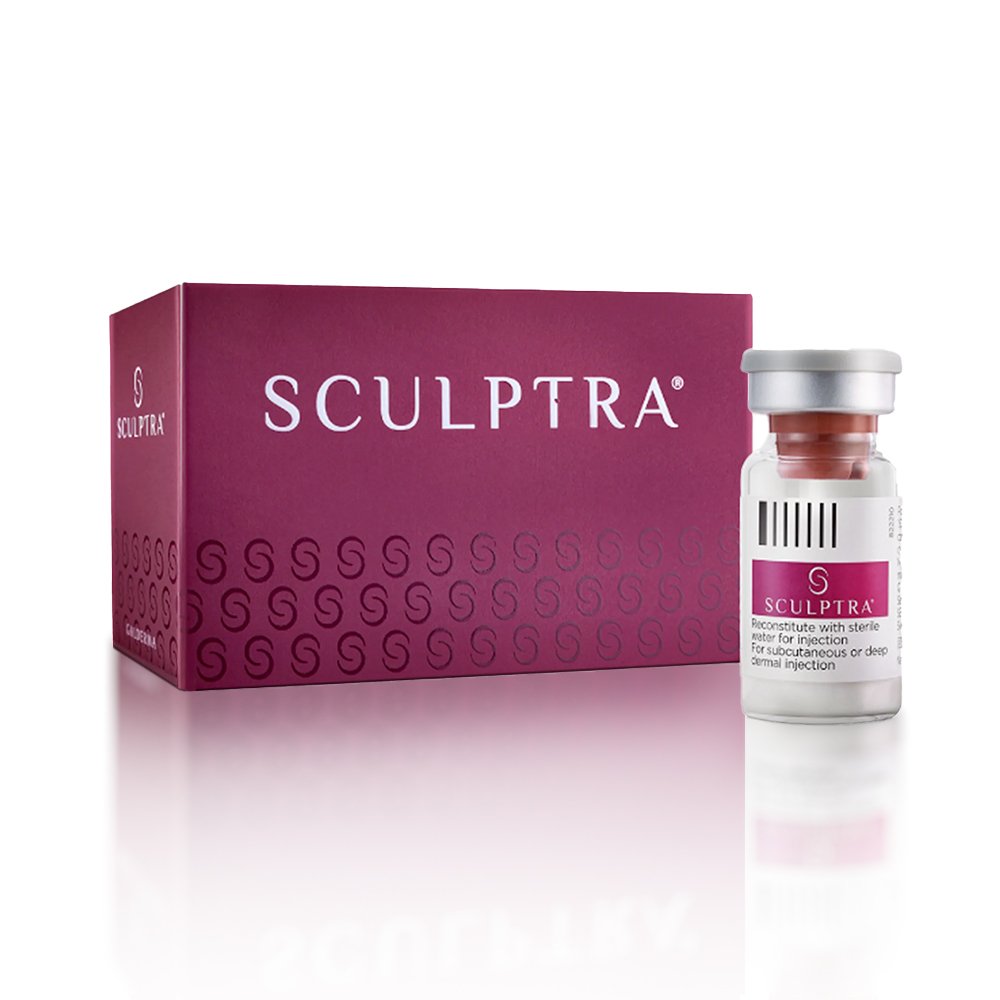
Sculptra is an injectable treatment that gradually restores facial volume and improves skin firmness by stimulating your body's own collagen production. Sculptra works over weeks to months as new collagen forms.
How it works
The active ingredient, poly-L-lactic acid (PLLA), is a biodegradable synthetic material. After injection:
It provides minimal immediate volume (mostly from the sterile water used to prepare it).
The PLLA particles stimulate collagen production over time.
As collagen builds, the treated area gradually becomes fuller and firmer.
The PLLA particles are eventually broken down and absorbed by the body.
Common treatment areas
Sculptra is commonly used to:
Restore volume in sunken cheeks
Improve temple hollowing
Soften smile lines (nasolabial folds)
Improve marionette lines
Define the jawline
Treat chin wrinkles
Improve skin quality in certain areas
It is also used off-label by experienced injectors for body areas such as:
Buttock enhancement ("Sculptra BBL")
Hip dips
Cellulite improvement
Neck and chest rejuvenation
Treatment schedule
Most people need:
2–4 treatment sessions
Sessions spaced 4–8 weeks apart
Results develop gradually over 3–6 months
The number of vials depends on your age, degree of volume loss, and treatment goals.
Aftercare
A commonly recommended guideline is the 5-5-5 rule:
Massage the treated area 5 minutes
5 times a day
For 5 days.
Possible side effects
Common side effects include:
Bruising
Swelling
Tenderness
Redness
Temporary discomfort
Small nodules or lumps under the skin
Infection
Who is a good candidate?
Sculptra may be appropriate for adults who:
Have age-related facial volume loss
Prefer gradual, natural-looking improvement
Want longer-lasting results than many traditional fillers
Are in generally good health
It may not be suitable for people with active skin infections at the injection site, certain autoimmune or inflammatory conditions, or a history of keloid or hypertrophic scar formation.